ADA Easily Accessible Portable Restroom Rental and Needed Accessibility Functions
Renting a mobile toilet seems basic till accessibility goes into the picture, and then it becomes something more crucial than a line thing on an occasion plan or jobsite checklist. It ends up being a concern of whether every guest, attendee, employee, or site visitor can in fact make use of the facilities with dignity.
That is where an ADA available mobile bathroom issues. Not as a politeness, and not as a good added, but as part of making a short-lived website function for real individuals with real wheelchair requirements. I have seen coordinators put actual treatment right into parking, signage, food service, and group circulation, then treat toilet gain access to as an afterthought. That generally causes last-minute rushing, unpleasant placement, or an unit that technically arrived on website but is practically pointless because the ground is soft, the strategy is obstructed, or the door clearance is compromised by bad setup.
The great news is that the controling framework is clear on the big factors. In the United States, the regulating government availability criterion for mobile commode rentals is the 2010 ADA Standards for Accessible Style, as analyzed by the Accessibility Board and the Division of Justice. If you are setting up temporary hygiene for an event or public-facing website, that standard is the location to start.
The first point to comprehend concerning easily accessible portable washroom rentals
People often search for phrases like ada portable bathroom rental, ada accessible mobile toilet, or ada compliant portable restrooms because they want one quick response. Generally the concern underneath is, "What am I in fact needed to supply?"
For clusters of mobile single-user commode devices, at least 5 percent of the units in each cluster have to come. The Accessibility Board has made clear that this applies even at temporary occasions. That single point addresses a shocking variety of rental questions.
If you rent out a bank of units for a reasonable, celebration, wedding event, showing off occasion, fundraiser, or public celebration, you do not satisfy accessibility by positioning conventional devices straight and thinking one will certainly do. The easily accessible need applies within the collection itself. The obtainable system also requires to be useful in practice, which means the course to it and the entrance right into it matter just as long as the label on the outside.
There is one nuance that journeys people up. The ADA standards distinguish mobile commode systems at building sites that are used solely by building and construction personnel. Those are treated differently under the pointed out 1991 criterion's portable-toilet access scoping policy. Yet that restricted distinction ought to not be stretched beyond what it says. For general portable toilet rentals, the accessible-unit need remains the crucial policy to focus on.
That distinction matters due to the fact that many individuals hear "building and construction site exemption" secondhand and think portable restrooms are broadly exempt. They are not. If the devices are offering the public, event visitors, or general website customers, ease of access still needs to be addressed.
What makes an ADA certified portable bathroom greater than just a larger unit
A lot of rental listings make use of terms like ada compliant mobile bathroom, ada-compliant portable commode, or ada handicap accessible portable restroom rather loosely. From a functional point ofview, dimension alone is not enough.
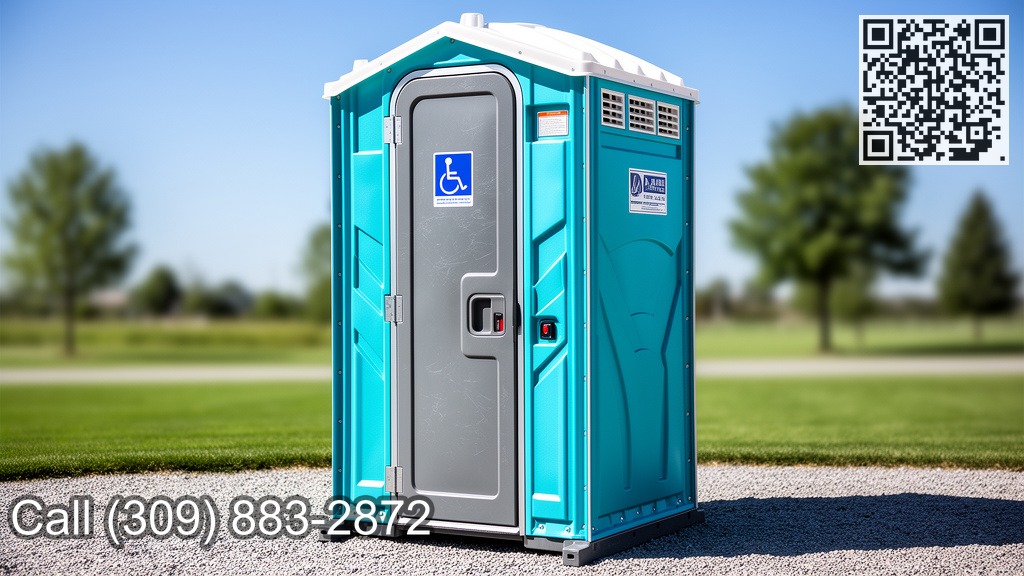
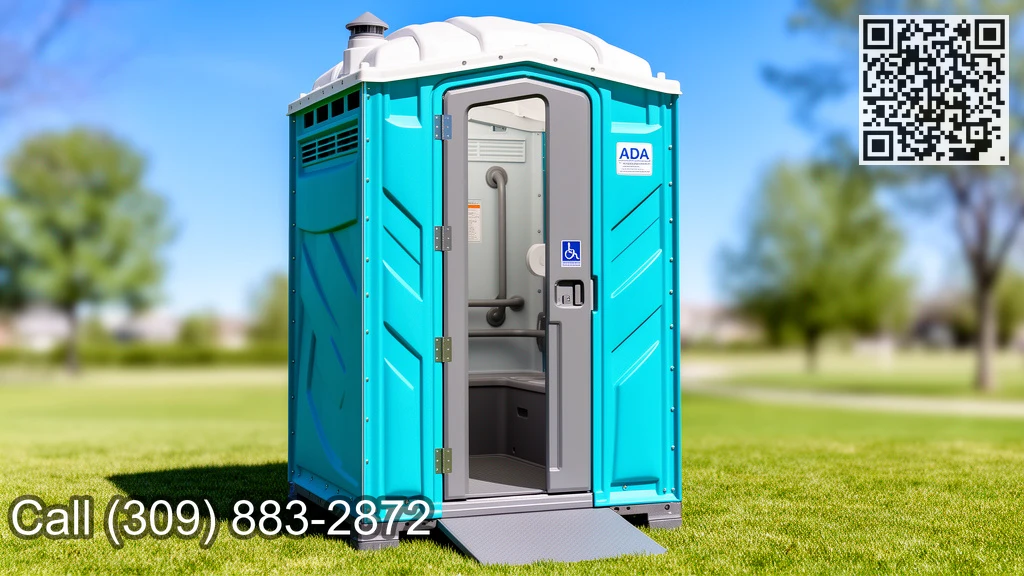
An accessible mobile bathroom have to meet technological needs that put on commode spaces. Those include fixture clearances, turning space, door steering clearances, and relevant grab bar and water storage room clearance policies. The available unit needs to likewise be understood the International Icon of Accessibility.
That suggests the question is not only, "Is this a wider mobile restroom?" It is additionally, "Does this device give the required inside capability?" If somebody using a wheelchair can not come close to the fixture correctly, transform inside the system, or maneuver via the door with enough clearance, then the individual experience fails also if the supplier's pamphlet calls it accessible.
This is why knowledgeable organizers ask far better questions of vendors. Not simply "Do you have ADA units?" but "Is the device designed to satisfy ADA toilet-room technical demands?" and "What do you require from us on site so the obtainable route and entry stay certified?"
Those 2 questions have a tendency to disclose whether you are managing a distributor that comprehends compliance or one that is only repeating an item label.
Placement is where excellent intentions typically fall apart
I have actually seen an ada mobile restroom supplied to the edge of an area since it was the simplest place for the truck to drop it. Theoretically, the system existed. In truth, the route to it crossed rutted lawn and a slope that would challenge lots of ambulatory visitors, not to mention somebody utilizing a flexibility device.
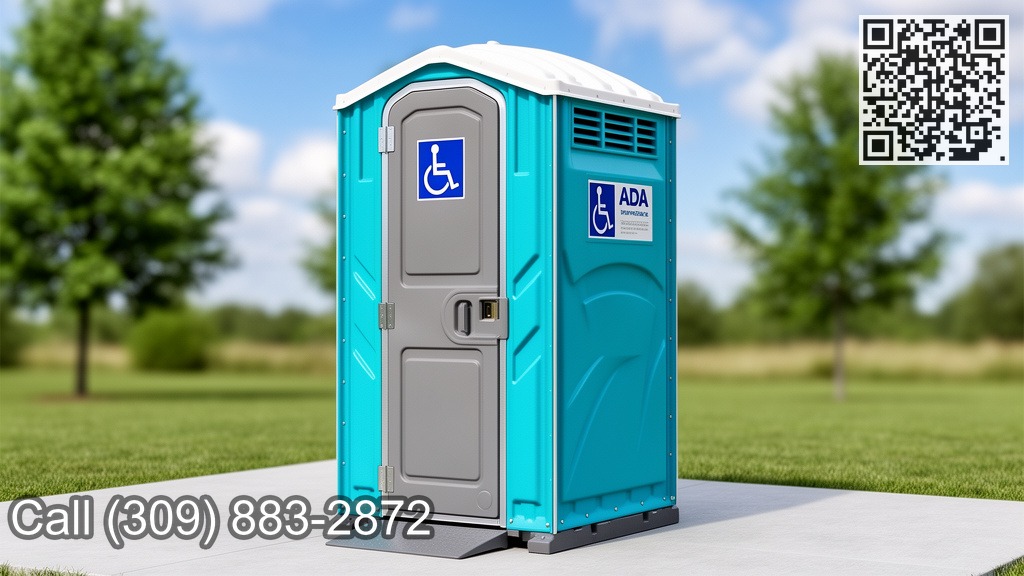
The standards do not quit at the device. Mobile available units should have an accessible path and entry. If ramps or touchdowns are needed, those likewise have to abide by ADA technical requirements. That information is not small. It is usually the distinction in between significant access and symbolic access.
This is where occasion manufacturers and site supervisors need to reduce. A portable system can be flawlessly manufactured and still come to be pointless because of the ground conditions around it. Mud, loosened crushed rock, soft turf, abrupt level changes, short-lived fencing, cable covers, generator cords, and crowd-control barriers can all disrupt access. None of those barriers really feel significant when the site is vacant at 7:00 a.m. During real use, they come to be extremely real.
When I talk with individuals intending washroom positioning, I usually urge them to envision the complete journey instead of the system alone. Someone has to situate the washroom, travel https://sethirjo407.bearsfanteamshop.com/ada-accessible-portable-toilet-rental-what-access-standards-apply to it, reach the door, get in, maneuver inside, and departure securely. If any kind of among those actions breaks down, the configuration is refraining from doing its job.
Accessibility ratios are basic, yet planning is not
The 5 percent rule appears straightforward, and mathematically it is. Operationally, it requires judgment.
If you have a single cluster of portable single-user units, a minimum of 5 percent of that collection need to be accessible. If your site has numerous clusters, the need puts on each collection rather than to the site as one big pooled number. That information matters on vast residential properties. I have actually seen organizers presume they can place all available devices in one central location and count them against the entire site. That can leave remote restroom financial institutions without an obtainable alternative where people in fact require one.
Even when the math works, distribution matters to individual experience. A visitor should not have to go across the complete impact of a fairground or event place since the only ada certified accessible portable restrooms were concentrated in the wrong area. The requirements tell you the minimum scoping guideline. Good planning includes common sense to that minimum.
Here is a brief functional structure that tends to prevent the most typical errors:
- Count each cluster individually and make certain a minimum of 5 percent in that collection are accessible.
- Confirm the device will certainly be marked with the International Icon of Accessibility.
- Inspect the path from the main flow path to the device before the supplier leaves.
- Check whether ramps or touchdowns are needed, and if they are, ensure they comply.
- Recheck access after fencing, staging, generators, and crowd controls are installed.
That percentage of self-control addresses issues that are pricey and humiliating to deal with after opening.
Why the obtainable course should have as much interest as the bathroom itself
People often listen to "accessible course" and think of an abstract layout term. On momentary websites, it is very concrete. It is the path a real individual will have to take a trip under actual conditions, which may include climate, groups, tools, and irregular terrain.
An ada certified portable toilet can fall short in technique if the route to it is blocked or unstable. I have actually seen this take place at area occasions where the washroom was placed behind a merchandise tent, at college features where extension cords crossed the method, and at outdoor events where rain transformed a decent-looking course right into deep mud in less than an hour.
The technological guidelines for course, entry, ramps, and touchdowns are there for a reason. Short-term does not suggest optional. As a matter of fact, temporary arrangements usually need even more focus due to the fact that a lot of pieces are set up swiftly and changed at the last minute.
There is additionally a human side to this that obtains missed. When access stops working at a bathroom, the customer is put in an especially uncomfortable position. They are usually much from home, depending on a crowded event layout, and taking care of a basic physical need that can not just be held off. That is why a compassionate technique issues right here. The trouble is not theoretical.
The language suppliers utilize can be confusing
Search results are crowded with expressions like ada certified portable commodes, ada-compliant portable washrooms, ada portable toilet, and ada certified mobile commode. Some listings take care and notified. Others are little bit greater than advertising and marketing shorthand.
If you are leasing, the best approach is to different item language from compliance concerns. A supplier calling a device an ada mobile restroom does not eliminate the tenant or site driver from confirming that the setup pleases the access needs that actually use. The device should be identified properly, and it has to have the required path, entry gain access to, and appropriate toilet-room features.
That may seem noticeable, however it gets overlooked in fast-moving logistics. A planner may presume the rental company is managing everything. The rental business might assume the site group is taking care of ground prep work and path access. After that the event opens up and neither side has inspected the details that matter most.
The much better rental discussions are specific. Ask what the system is developed to suit. Ask just how recognition is handled. Ask what site problems are required. Ask who is responsible for positioning and route preparedness. Clear obligation prevents finger-pointing later.
Temporary occasions are not outside the rules
This point deserves its very own section since it remains one of one of the most typical misconceptions. Some organizers still think that due to the fact that an event lasts one day, one weekend break, or one week, the access assumptions are loosened up. For mobile commode clusters, they are not. The Accessibility Board states the 5 percent accessible-unit need uses even at momentary events.
That matters for festivals, races, public parties, outdoor concerts, charity strolls, seasonal destinations, and metropolitan celebrations. The shorter timeline does not remove the accessibility obligation. If anything, temporary occasions need tighter focus because they are put together quickly, frequently on incomplete sites, and frequently by teams juggling dozens of vendors at once.
I have observed that the occasions that do this ideal do not treat accessibility as a specialty problem. They cook it into routine website procedures. The bathroom vendor is knotted in early. The obtainable course is taken into consideration during design, not after fence goes up. The accessible system is positioned near actual attendee circulation rather than in remaining area. Someone on website is assigned to walk the route and check it during the event.
That sort of planning seldom looks dramatic from the exterior. It just really feels smooth to individuals who require it.
Construction sites need a more mindful reading
Construction is where conversations regarding mobile restroom access can obtain muddy. The verified context is accurate: mobile bathroom devices at building sites made use of solely by construction employees were discriminated under the pointed out 1991 criterion's scoping guideline. That does not create a blanket pass for every site with a hard hat on it.
If a project group is trying to understand whether a specific setup gets approved for that difference, it deserves slowing down and reviewing the appropriate regulation very carefully rather than depending on presumptions. The phrase "made use of solely by building and construction personnel" brings weight. When a site or section of a website serves broader individuals, the analysis changes.
From a threat and preparation perspective, this is a location where broad generalizations can cause problem. Lots of mixed-use environments do not fit nicely right into one of the most limited interpretation of a construction-only exemption. If the site entails public gain access to, customer visits, sales task, or other non-construction uses, you must not delicately presume that an exception created for a slim context uses across the board.
Accessibility compliance becomes part of a broader enforcement climate
Another reality worth keeping in sight is that accessibility conformity is not diminishing into the background. It rests inside a larger setting of recurring ADA activity and enforcement. One indication of that broader environment is the Division of Justice's April 2026 advice expanding the target date for sure state and city government internet and mobile ease of access policies to April 26, 2027 for larger entities.
That support is not concerning mobile restrooms especially, but it does reflect a larger fact. Availability commitments are active, noticeable, and significantly part of functional planning throughout industries. For website drivers, communities, schools, public firms, event organizers, and professionals, that broader context ought to be a reminder not to treat physical access as a box to examine just if a person complains.
The organizations that take care of ease of access well normally have a regular way of thinking across everything they do. They do not separate digital accessibility, route preparation, signs, and centers access into unrelated silos. They comprehend that availability is experienced by an individual as one continuous chain.
What occupants should validate before the truck arrives
A surprising quantity of stress can be avoided with a brief pre-delivery review. The factor is not to end up being a code professional overnight. It is to see to it the conditions on site will enable the available device to function as intended.
The most valuable questions are straightforward and functional:
- How several collections will certainly get on site, and does each collection consist of the required easily accessible percentage?
- Where specifically will the easily accessible units be put about main blood circulation paths?
- Will the systems be marked with the International Symbol of Accessibility?
- Is the ground stable enough to sustain an obtainable route and entry?
- Are any ramps or touchdowns required, and if so, who is in charge of seeing to it they comply?
That checklist is short due to the fact that it needs to be usable. Lengthy conformity discussions are typically less efficient than 5 clear inquiries asked early adequate to act on the answers.
The most usual error is dealing with ease of access as a specialty add-on
If I needed to steam years of mobile washroom preparation problems down to one pattern, it would certainly be this: too many teams think about the accessible device as a separate point rather than as part of the fundamental restroom plan.
They rent the common devices initially, make a decision where the group will be second, finalize fence and devices placement 3rd, and just after that ask where the ada compliant portable bathroom can fit. By that factor, the obtainable system is being squeezed into leftover space, normally with a jeopardized route.
A much better strategy is to place the accessible device initially throughout planning, then develop the remainder of the bathroom collection and adjacent format around that decision. It seems little, yet it alters everything. The path is clearer. The entry is much less likely to be blocked. The unit is easier to locate. The vendor has less last-minute guidelines. The customer has a far better experience.
That is what good availability job commonly appears like. Not flashy, not made complex, just deliberate from the beginning.
Dignity is the genuine standard individuals remember
Most individuals attending an occasion or going to a short-lived website will certainly never consider the technical language behind an ada-compliant portable bathroom. They will simply see whether they can make use of the toilet separately or not.
That is the part that has a tendency to stick to me. Compliance language issues due to the fact that it supplies a structure, but the lived experience is what offers it implying. An individual either gets to the system, gets through the door, has sufficient area to maneuver, and utilizes the component with dignity, or they do not.
When tenants and coordinators recognize that, their choices enhance. They ask much better inquiries. They position systems more attentively. They examine the route. They resist the lure to deal with access as a last-minute lodging. And they quit presuming that a bigger mobile washroom instantly resolves the issue.
If you are organizing an ada mobile commode leasing, the basic to aim for is not simply having an accessible-looking device on the invoice. It is creating an arrangement that operates in the actual conditions of your website. The 2010 ADA Requirements for Accessible Design, along with the Access Board and DOJ analyses, give you the governing framework. From there, the work is practical and human: supply the needed number of obtainable devices in each collection, determine them effectively, ensure the course and entryway come, and protect the clearances and steering area that make the unit usable.
That is what transforms an ada obtainable mobile bathroom from an item group into actual access.
 Ask ChatGPT
 Ask Grok
 Ask Perplexity
 Ask Claude
 Ask Google AI
 Ask You